
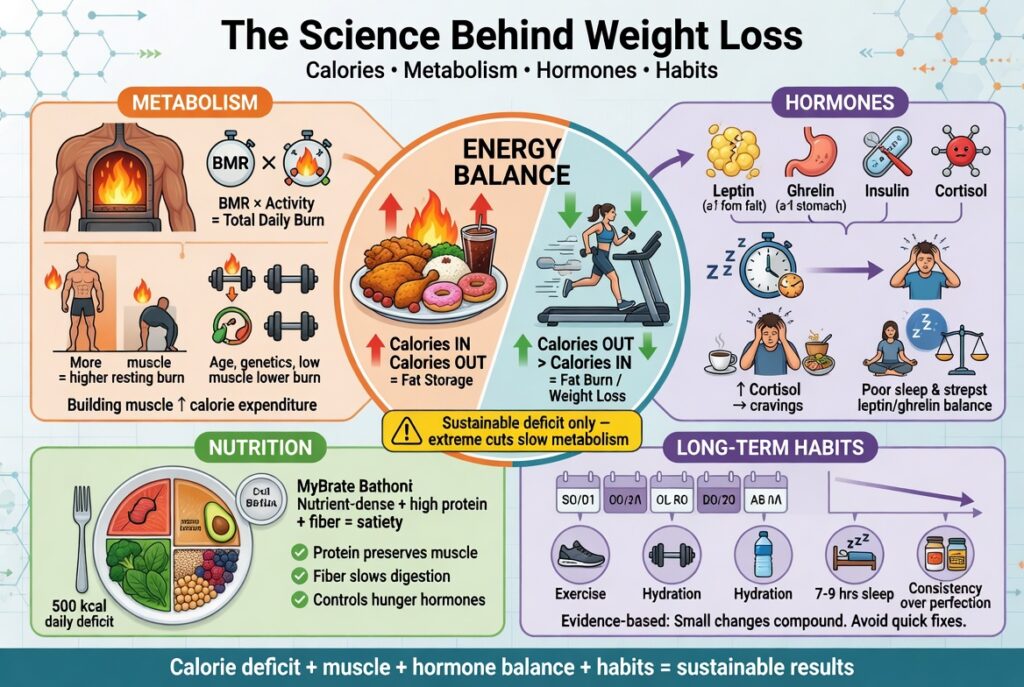
The science behind weight loss is a topic that interests millions of people looking to improve their health and manage their weight effectively. While many diets promise quick results, sustainable weight loss is based on scientific principles that involve calorie balance, metabolism, hormones, and lifestyle choices. Understanding the science behind weight loss can help you make better decisions and avoid common misconceptions.
Understanding the Science Behind Weight Loss
The foundation of the science behind weight loss is energy balance. Your body uses calories as fuel for daily activities, including breathing, digestion, and physical movement. When you consume more calories than your body burns, the extra energy is stored as fat. Conversely, when you burn more calories than you consume, your body begins using stored fat for energy, resulting in weight loss.
Creating a calorie deficit is essential for losing weight. However, the size of the deficit should be reasonable and sustainable. Extreme calorie restriction can slow metabolism and make it harder to maintain results over time.
How Metabolism Influences the Science Behind Weight Loss
Metabolism plays a major role in the science behind weight loss. It refers to the chemical processes that convert food into energy. Your metabolic rate determines how many calories you burn throughout the day.
Several factors affect metabolism, including age, gender, genetics, and muscle mass. People with more muscle tissue generally burn more calories at rest than those with less muscle. This is one reason why strength training is often recommended as part of a weight-loss plan. Building muscle can help increase calorie expenditure and support long-term weight management.
Hormones and the Science Behind Weight Loss
Hormones are another key factor in the science behind weight loss. These chemical messengers regulate hunger, fullness, and fat storage. Hormones such as leptin and ghrelin help control appetite, while insulin manages blood sugar levels.
When sleep is inadequate or stress levels are high, hormone balance can be disrupted. Increased cortisol levels may lead to cravings and overeating, making weight loss more difficult. Maintaining healthy sleep habits and managing stress can support hormonal balance and improve weight-loss outcomes.
Nutrition and Healthy Eating Habits
A balanced diet is essential for successful weight loss. The science behind weight loss shows that nutrient-dense foods help control hunger while providing essential vitamins and minerals. Lean proteins, fruits, vegetables, whole grains, and healthy fats can improve satiety and support overall health.
Protein is particularly beneficial because it helps preserve muscle mass and keeps you feeling full longer. Fiber-rich foods also promote fullness and support healthy digestion, making it easier to maintain a calorie deficit.
Long-Term Success with the Science Behind Weight Loss
The science behind weight loss emphasizes consistency rather than perfection. Sustainable habits such as regular exercise, balanced nutrition, proper hydration, and adequate sleep are more effective than short-term fad diets. Small lifestyle changes performed consistently can produce significant results over time.
By understanding the science behind weight loss, you can focus on evidence-based strategies that support healthy, lasting weight management. Instead of searching for quick fixes, prioritize habits that promote long-term success and overall well-being.
here external link https://www.who.int/news-room/fact-sheets/detail/healthy-diet
here internal link https://samakabhub.com/nutrition-diet-medical-professional-women-healthy/