
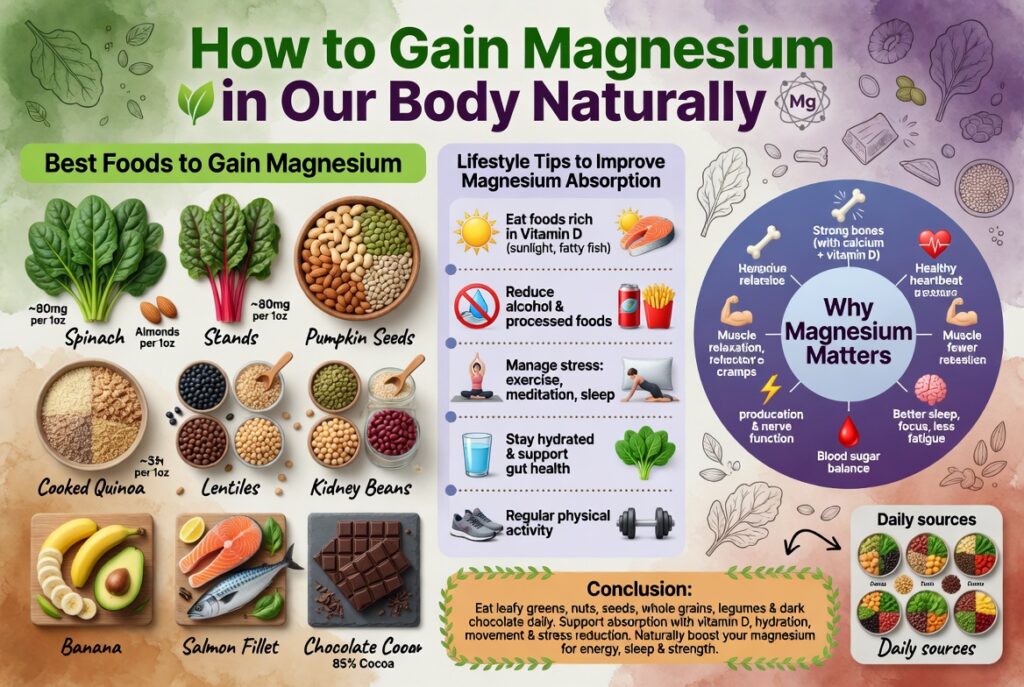
How to gain magnesium in our body is a common question among people looking to improve their overall health and well-being. Magnesium is an essential mineral that plays a vital role in hundreds of bodily functions, including muscle movement, nerve function, energy production, heart health, and bone strength. Since the human body cannot produce magnesium on its own, it is important to obtain sufficient amounts through diet and healthy lifestyle choices. Understanding how to gain magnesium in our body can help prevent deficiencies and support long-term health.
Magnesium is involved in regulating blood pressure, maintaining a healthy heartbeat, supporting immune function, and helping the body convert food into energy. A lack of magnesium may lead to symptoms such as fatigue, muscle cramps, weakness, headaches, poor sleep, and difficulty concentrating. Therefore, increasing magnesium intake is an important part of maintaining optimal health.
Best Foods to Gain Magnesium in Our Body
One of the most effective ways to gain magnesium in our body is by consuming magnesium-rich foods regularly. Leafy green vegetables such as spinach, kale, and Swiss chard are excellent sources of magnesium. Nuts and seeds, including almonds, cashews, pumpkin seeds, and sunflower seeds, also contain high levels of this important mineral.
Whole grains such as brown rice, quinoa, oats, and whole wheat products can contribute significantly to daily magnesium intake. Legumes like black beans, lentils, chickpeas, and kidney beans are nutritious options that provide magnesium along with fiber and protein. Fruits such as bananas and avocados also contain magnesium and can be easily incorporated into a balanced diet.
Seafood, especially salmon and mackerel, offers moderate amounts of magnesium while providing healthy omega-3 fatty acids. Dark chocolate with a high cocoa content is another enjoyable source of magnesium that can be consumed in moderation.
Lifestyle Tips to Improve Magnesium Absorption
Learning how to gain magnesium in our body involves more than simply eating magnesium-rich foods. Proper absorption is equally important. Consuming a balanced diet rich in vitamins and minerals helps the body utilize magnesium more effectively. Vitamin D, in particular, supports magnesium absorption and utilization.
Reducing excessive alcohol consumption and limiting highly processed foods may help maintain healthy magnesium levels. Chronic stress can also affect magnesium stores in the body, making stress management techniques such as exercise, meditation, and adequate sleep beneficial for overall mineral balance.
Staying hydrated and maintaining a healthy digestive system can further support magnesium absorption. Regular physical activity also contributes to better nutrient utilization and overall wellness.
Why Magnesium Is Important for Overall Health
Magnesium supports numerous biological processes that are essential for good health. It helps maintain strong bones by working alongside calcium and vitamin D. It also plays a critical role in muscle contraction and relaxation, making it important for athletes and physically active individuals.
Additionally, magnesium contributes to healthy nerve signaling, supports cardiovascular health, and assists in maintaining normal blood sugar levels. Ensuring adequate magnesium intake can help promote energy production, better sleep quality, and improved physical performance.
Conclusion
Understanding how to gain magnesium in our body is essential for maintaining optimal health. By eating magnesium-rich foods such as leafy greens, nuts, seeds, whole grains, legumes, and fish, while supporting absorption through healthy lifestyle habits, individuals can improve their magnesium levels naturally. Consistent attention to nutrition and wellness can help ensure the body receives the magnesium it needs for
here an internal link https://samakabhub.com/complete-body-transformation-handbook/
here an external link https://www.hsph.harvard.edu/nutritionsource/